


How to Choose the Right Size and Shape of an Office Chair
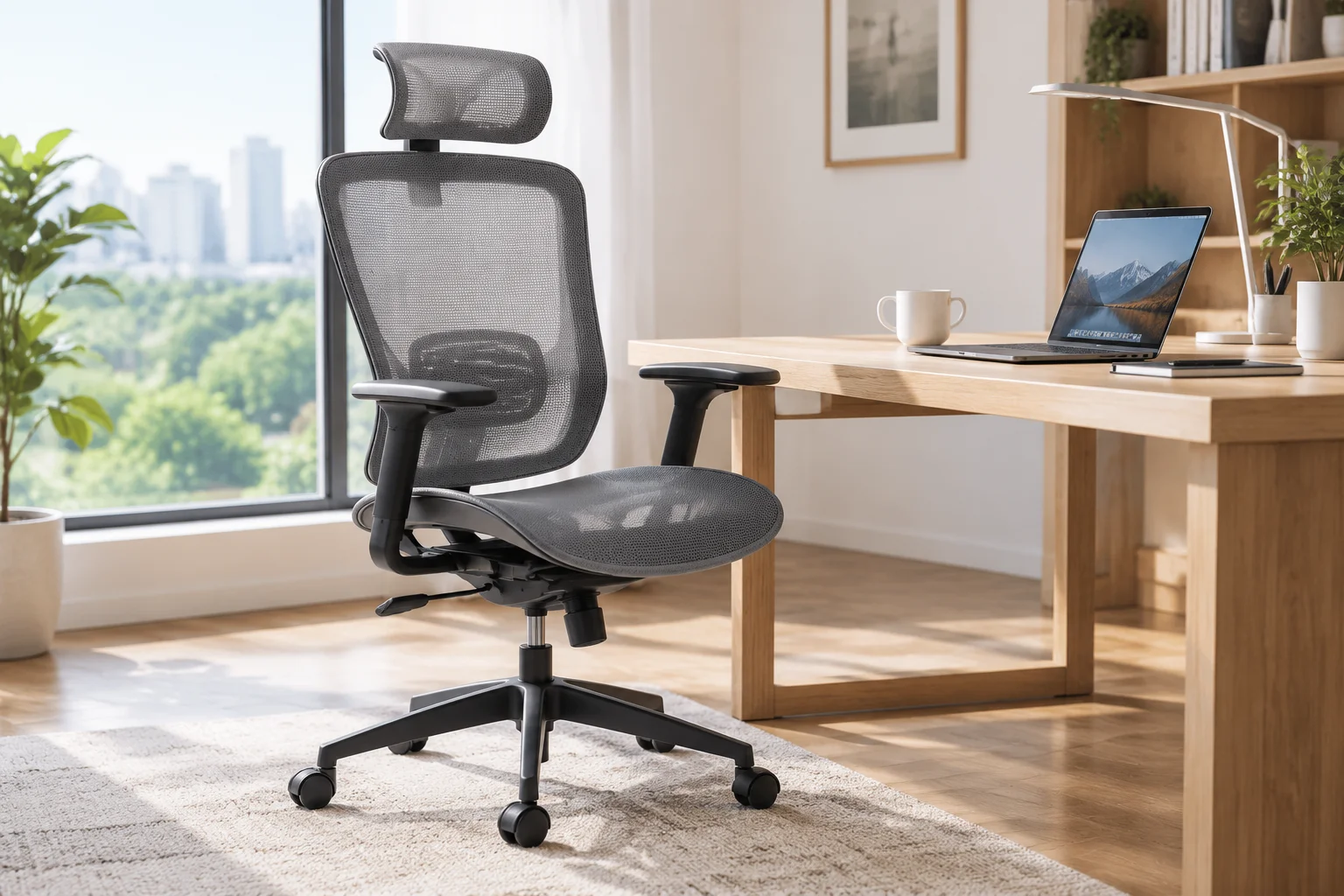
Sitting at a desk for eight hours demands more from your body than most people realize. When the seat beneath you fails to match your physical proportions, fatigue sets in before noon. Choosing the right chair for your workspace is not merely about picking a stylish piece of furniture; it is an investment in daily comfort and long-term physical health.
Many buyers focus on the color or the brand name while ignoring the fundamental geometry of the seat. Yet every millimeter of height, width, and depth dictates how your spine curves and how your legs rest. Viewvexlo exists to demystify these measurements so that your workspace serves you rather than straining you.
Mastering Seat Height Dimensions
Your feet tell you everything you need to know about proper seat height. When you sit back into the cushions, the soles of your shoes must rest flat against the floor. Knees should bend at a comfortable ninety-degree angle, forming a parallel line with your hips.
Gas lift mechanisms allow users to fine-tune this vertical position. Raising the seat too high leaves legs dangling, which cuts off circulation behind the thighs. Lowering it too far forces knees upward toward the chest, dumping excessive pressure onto the lower spine. Always test the adjustment lever while sitting in it to ensure smooth transitions throughout the day.
Finding the Ideal Seat Width and Depth
Width and depth work together to cradle your lower body. A proper seat pan leaves about two to three inches of space between the edge of the cushion and the back of your knees. Without this gap, the seat digs into your calves, restricting blood flow and causing numbness.
- Measure the distance from your lower back to the back of your knees.
- Subtract three inches to find your optimal seat depth.
- Ensure the seat pan width allows hips to rest without pinching.
- Look for sliding seat pans if multiple people share the desk.
- Check that armrests do not force your elbows outward unnaturally.
- Avoid overly soft cushions that swallow your hips and trap heat.
Wide seats might feel cozy at first glance, but they often prevent you from reaching the armrests properly. Narrow seats restrict movement, locking you into a rigid posture. Balance is everything when selecting the boundaries of your seating area.
Evaluating Ergonomic Proportions and Support
Ergonomics is not a marketing buzzword; it is the science of fitting the tool to the user. A proper backrest curves to match the natural inward swoop of your lumbar spine. Without this lumbar support, muscles in your lower back tighten to keep you upright.
Tilt mechanisms encourage dynamic sitting, allowing you to shift positions safely without losing contact with the backrest. Fixed chairs force static tension into your shoulders. Lean back into the chair, and let the mechanism support your weight as you type, read, or take phone calls.
Assessing Your Available Workspace
Even the most advanced chair fails if it battles your room. Measure the clearance around your desk before bringing a new seat home. Armrests must slide underneath the desktop easily, otherwise you lean forward and hunch over the keyboard.
Casters require adequate floor space to roll smoothly. Carpeted floors demand hard wheels, while hardwood surfaces need soft rubber rollers to prevent scratches. Take a tape measure to your office, map out the swivel radius, and ensure your chair moves freely within its designated zone.
Take time to evaluate your daily habits, your body dimensions, and your room layout before making a final decision. A well-fitted workspace quietly fades into the background, leaving you free to focus entirely on the work in front of you.
Comments
Anoush Harutiunian
We ordered several services and always received excellent results. I recommend!
Armen Sargisian
Clear organization of work and individual approach to the client. I recommend!
Mariam Grigorian
The politeness of the employees does not prevent the poor quality of services. I will look for another company.
Vahan Petrosian
Unfortunately, the service left much to be desired. The work was done poorly, I expected more.